
Banned reporters return to White House under court order — and the press corps treats it like a liberation
A federal judge forced the White House to restore access for CNN, MS NOW, and Politico reporters on Thursday, and their colleagues greeted them with applause, selfies, and behind-the-scenes footage as if a hostage crisis had ended rather than a six-day credential dispute.
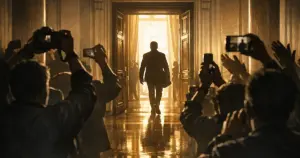
U.S. District Judge Timothy Kelly, himself a Trump appointee, granted a 14-day temporary restraining order requiring the administration to immediately reinstate press credentials for journalists from the three outlets. The reporters had been barred from the White House complex since the previous Friday, when President Trump announced the ban in a Truth Social post accusing them of reporting "FICTION and LIES." By Thursday afternoon, the banned journalists were back on the grounds, and the press corps turned their return into a spectacle that the Daily Caller described as something closer to a ticker-tape parade than a normal workday.
The scene unfolded on the same day Chinese President Xi Jinping was traveling to the White House, meaning the press corps chose to make its own access dispute the main event on a day with genuine geopolitical news to cover.
Judge Kelly called the bar "high", then said the outlets cleared it
Kelly's order required the White House to "immediately return, reinstate, and restore" press access for the three outlets, Breitbart reported. The judge found that the outlets were likely to succeed in proving their press passes had been revoked without due process. "This is a high bar, but Plaintiffs have met it," Kelly wrote.
The restraining order lasts 14 days, which means the legal fight is far from over. The three outlets filed suit earlier in the week seeking an injunction to restore their credentials, and the case will continue to move through the courts well beyond the TRO's expiration.
The ruling itself was not a surprise. Aaron Terr, director of public advocacy at the Foundation for Individual Rights and Expression, had predicted the administration would lose. "I think the Trump administration will not fare well in court because its action here is blatantly unconstitutional," Terr told Fox News.
That assessment deserves some scrutiny. Courts have long recognized that the White House has broad discretion over who receives credentials. Access to the White House is a privilege, and presidents from both parties have taken liberties in deciding which organizations receive it. The legal question is narrower than Terr's sweeping constitutional claim suggests: it is whether the process by which these particular credentials were pulled met due-process requirements, not whether the president lacks any authority to manage press access at all.
Five networks pulled pool coverage in solidarity, then celebrated when the ban broke
The press corps response to the ban went beyond statements. Five U.S. broadcasters halted White House pool coverage in solidarity with the banned outlets. Fox News, ABC, CBS, and NBC all refused to take CNN's place in the White House television pool rotation. The White House Correspondents' Association president, Jacqui Heinrich, declared that "today's action revoking access for journalists from CNN, POLITICO, and MSNOW violates the First Amendment."
That solidarity carried a self-congratulatory edge. When the banned reporters walked back onto the grounds Thursday, colleagues broke into applause. Reporters took selfies. Behind-the-scenes footage circulated on social media. The atmosphere, by all accounts, resembled a celebration, not a press pool going back to work.
The pattern of the press making itself the story is familiar enough by now. Curtis Houck captured it on X:
"For liberal, elitist journalists, CNN/MS NOW/Politico returning is their version of the soldiers raising the flag at Iwo Jima."
The comparison is biting because it is proportional to the press corps' own behavior. Nobody went to war. Nobody stormed a beach. Reporters had their building passes pulled for less than a week, a court reversed the decision on procedural grounds, and they walked back through the gate. The applause and selfies were for themselves.
Trump's ban drew a sharp line, and enforcement was uneven from the start
Trump announced the ban on Friday, September 18, via Truth Social. He accused CNN, MS NOW, and Politico of cumulative dishonest reporting and said they should not enjoy privileged access while they "constantly write or report FICTION and LIES." He also warned that "Other Fake News Media Outlets" could follow and separately threatened to ban the Washington Post and New York Times.
The practical enforcement was uneven from the beginning. The New York Post reported that reporters from all three outlets remained on White House grounds as of Friday evening, even after the ban was announced. The White House insisted the banned outlets could still report from outside the grounds, but the gap between the announcement and actual removal undercut the move's seriousness.
By Thursday morning, the enforcement had apparently tightened. Ben Leo posted on X that CNN journalists "were denied access this morning when they tried to get in", only to be allowed back hours later once the TRO came through.
CNN responded to the original ban with a statement calling it "an illegal assault on that fundamental and constitutionally-protected right" of press access. The Washington Examiner noted that the move represented a direct escalation of Trump's long-running confrontation with outlets he considers hostile.
The administration's frustration with press coverage is not unique to this episode. The White House has repeatedly pushed back against media narratives it considers fabricated, and Trump-aligned officials across the government have clashed with reporters and commentators over coverage they view as dishonest.
A privilege question the press refuses to ask itself
The legal system will sort out whether the White House followed proper procedure in pulling credentials. Judge Kelly's TRO suggests the administration moved too fast and without adequate process, a procedural failing, not a vindication of the outlets' coverage.
But the press corps' reaction reveals something the courts will not address. The applause, the selfies, the pool boycott, the Iwo Jima-level self-regard, none of it involved a single moment of self-examination about why the president felt compelled to act in the first place. Trump accused three major outlets of persistent dishonesty. Whether or not banning them was the right mechanism, the underlying complaint is one that tens of millions of Americans share.
The broader clash between Trump-world and the media establishment has defined this presidency from its first day. The press has treated every confrontation as an existential threat to democracy. The public, meanwhile, has watched the same outlets get major stories wrong, run with single-source speculation, and treat their own institutional interests as synonymous with the public interest.
Credential disputes have happened before under presidents of both parties. What has not happened before is a press corps that greets its own return to a building with the emotional intensity of a wartime homecoming. The gap between how journalists see themselves and how the public sees them has never been wider.
Even as the press celebrated, the political ground was shifting elsewhere. Democrats breaking ranks on Trump-backed legislation and ongoing fights over executive authority suggest the real story of this presidency is being written in policy, not in press-pool disputes. The reporters cheering their own return did not seem to notice.
When the people who cover the powerful start treating their own access as the most important story in the building, they have stopped being reporters and started being participants. The applause was not for the First Amendment. It was for themselves.
