

Fauci's private COVID diaries show celebrity fixation, cozy media ties, and behind-the-scenes battles
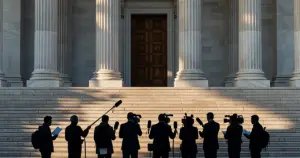
Senate Homeland Security Chairman Rand Paul released Dr. Anthony Fauci's personal diary entries days before Fauci's subpoenaed Senate testimony, and the pages reveal a public health chief consumed by fame as Americans died.
While tens of thousands of Americans were losing their lives to COVID-19 in the spring of 2020, Dr. Anthony Fauci was tracking his own press coverage with the enthusiasm of a Hollywood publicist. On April 7, 2020, with roughly 60,000 Americans already dead, Fauci wrote in his private diary that the "press still hot and heavy about me. Multiple stories per day directly or indirectly involving me," the New York Post reported.
Six weeks later, with the American death toll approaching 98,000, Fauci's self-assessment grew even more extravagant. On May 21, 2020, he described his "national and international fame" as "explosive and really unimaginable," Newsmax reported. By late June, with daily COVID cases hitting a then-record 40,000, the nation's top infectious disease expert had received an invitation to appear on ABC's "Dancing With the Stars."
That is the picture that emerges from the diary entries Sen. Paul, the Kentucky Republican who chairs the Senate Homeland Security Committee, made public ahead of Fauci's scheduled testimony before the Senate Homeland Security and Governmental Affairs Committee. Paul subpoenaed Fauci to appear, and the diary release, available in full on Fox News, sets the stage for what promises to be a contentious hearing. Paul has long pressed Fauci on pandemic-era decisions, including whether U.S. tax dollars funded gain-of-function research at the Wuhan Institute of Virology.
Fauci's early entries paint a warm relationship with Trump, before it soured
The diary's early pages describe a working dynamic between Fauci and President Donald Trump that was far warmer than the adversarial relationship that later dominated headlines. Trump repeatedly directed questions to Fauci during White House meetings, called him "the smartest person in the world," and told him directly: "We are counting on you." Trump appeared "enamored" with Fauci as the doctor's national profile grew, Fauci wrote.
But that relationship frayed as White House staff moved to limit Fauci's media exposure. In a May 2020 entry, then-White House communications director Alyssa Farah admitted to Fauci that staff had been "holding me back" and that the situation had "gotten out of hand." Farah promised to begin clearing his television requests again. Fauci described Farah as an ally in what he framed as ongoing internal battles over his access to the cameras.
Chief of Staff Mark Meadows was no such ally. The diary chronicles a deteriorating relationship between the two men. Meadows threatened to keep Fauci off television entirely and repeatedly pushed him to soften his public messaging. In one entry, Fauci described Meadows as "screaming" over Fauci's public comments.
By July 2, 2020, Fauci turned his sharpest language on Michael Caputo, then the HHS assistant secretary for public affairs, the department's top communications official. Fauci called Caputo "a con man who is completely full of sh***," writing that Caputo publicly claimed to support his television appearances while privately blocking them.
CNN anchors texted encouragement and hosted private dinners
Among the diary's most revealing threads is the relationship between Fauci and CNN. Anchor Jake Tapper appears repeatedly. Fauci documented phone calls, text exchanges, and dinners at the Tappers' Washington home. After one CNN interview, Tapper privately checked to make sure the segment hadn't caused problems for Fauci with the White House.
That kind of solicitude from a journalist toward a government source raises basic questions about editorial independence. Tapper was not covering Fauci at arm's length. He was hosting him for dinner and worrying about political fallout from his own network's interviews.
Dana Bash, another CNN anchor, offered similar support. After a heated exchange between Fauci and Rep. Jim Jordan of Ohio at a congressional hearing, Bash texted Fauci to tell him he was "a better man." The following day, Bash texted again, pointing Fauci to a Vanity Fair headline mocking Jordan's performance. She also relayed a joke from CNN colleague Wolf Blitzer, who said no one would have blamed Fauci if he had told Jordan to "go f*** yourself."
For viewers who suspected that CNN's pandemic coverage tilted heavily toward Fauci's preferred narrative, the diary entries provide a documented trail. These were not adversarial journalist-source interactions. They were friendships, complete with private dinners, congratulatory texts, and shared mockery of Republican lawmakers. The kind of accountability journalism that government leak investigations sometimes aim to uncover was apparently unnecessary, the coziness was hiding in plain sight.
Fauci cursed out a reporter who questioned his standing
Fauci's temper was not reserved for Trump administration officials. When Peter Nicholas, a staff writer at The Atlantic, suggested Fauci had been "humiliated" over a canceled Tapper interview, Fauci's diary response was blunt: "F*** you, Peter."
The entry is a small moment, but it captures something larger. Fauci's diary reveals a man intensely sensitive to his own public image, and willing to lash out, at least privately, at anyone who suggested that image had been dented. That sensitivity sits uneasily alongside the sober, science-follows-the-data persona Fauci projected on camera for years.
Oracle co-founder Larry Ellison also drew Fauci's private assessment. The billionaire appeared in the diary in connection with White House efforts to use Oracle technology during the pandemic. Fauci described Ellison as "a bit of a loose cannon."
Hollywood and celebrity culture wove through the pandemic response
The diary entries read, at times, less like the journal of a public health official managing a national crisis and more like the social calendar of a Washington celebrity. Actress Julia Roberts hosted Fauci on Instagram Live, sent him flowers, and later presented him with an award. Vogue editor Anna Wintour, comedian Trevor Noah, NBA star Steph Curry, actors Sean Penn and Matt Damon, and rapper Lil Wayne all appear in the pages.
None of that celebrity contact is inherently wrong. Public health officials can and should communicate broadly. But the sheer volume of A-list interactions, set against a backdrop of mounting deaths and economic devastation, reinforces the portrait of a man who had become a cultural figure first and a crisis manager second. The diary does not read like the private record of someone losing sleep over hospital capacity. It reads like the record of someone tracking his own star.
At the 2022 Kennedy Center Honors, well after the worst of the pandemic, Fauci wrote that he hugged Hunter Biden. Biden joked that the internet "would explode" if someone photographed them together because they were both "being attacked by the far right GOP." It was a moment of shared victimhood between two figures who, by that point, had become symbols of accountability failures that millions of Americans wanted answers to. Fauci, characteristically, recorded it in his diary. The scene captures a Washington where political insiders facing scrutiny find comfort in each other's company rather than in transparency.
Paul's subpoena puts Fauci back under oath
Sen. Paul released the diary entries days before Fauci's scheduled appearance before the Senate Homeland Security and Governmental Affairs Committee. The timing is deliberate. Paul subpoenaed Fauci to testify, and the diary gives senators, and the public, a road map of questions to ask.
How did a public health official manage to cultivate a celebrity ecosystem while overseeing the nation's pandemic response? Why were CNN anchors texting encouragement and hosting dinners for a man whose public statements they were supposed to scrutinize? And what does it say about the integrity of the government's COVID messaging that the man at the center of it was privately obsessed with his own fame?
The diary does not answer those questions. But it puts them on the record in Fauci's own handwriting. And now, under subpoena, he will have to answer them under oath.
Americans who lost jobs, businesses, and loved ones during the pandemic deserved a public health leader focused on saving lives, not one counting press clips and dining with cable news anchors.
