

Trump threatens military force against Iran as Swiss peace talks collapse in 80 minutes
High-level U.S.-Iran peace talks at a mountaintop resort in Switzerland fell apart Sunday after roughly 80 minutes when Iranian negotiators walked out, citing what Iran's state news agency called "an insulting message by the US president." The collapse came after President Donald Trump issued blunt threats against Tehran, including a warning, reported by Fox News correspondent Trey Yingst, that he would "blow the s*** out of" Iran if it did not back down over the Strait of Hormuz.
The dramatic breakdown at Buergenstock, a Qatari-owned resort in the Swiss Alps, marked the first round of negotiations held under the terms of a 14-point memorandum of understanding that Washington and Tehran had agreed to roughly one week earlier. That MOU established a 60-day window for peace negotiations, a window that now looks far less promising than it did seven days ago.
The question facing the administration is whether Trump's pressure campaign will force Iran back to the table on American terms, or whether the talks are headed for the kind of failure Sen. Lindsey Graham publicly predicted on the same day they collapsed.
What Trump said, and how Iran responded
Trump's threats were unusually direct, even by his own standards. Yingst reported that the president told Iranian leaders: "You won't even make it back to your f***ing country." He added: "You close it, and you won't have a country." And on the Strait of Hormuz itself: "We may take over the Strait, if we have to. I'll blow the s*** out of them."
Trump also posted on Truth Social, warning Tehran to rein in Hezbollah in Lebanon:
"Iran must immediately stop their highly paid PROXIES in Lebanon from causing trouble. If they don't we'll hit Iran very hard again, just like we did last week, only harder!!!"
The reference to striking Iran "last week" points to a prior U.S. military action against Iran, though the specifics of that strike were not detailed in the reporting.
Iran's chief negotiator, Mohammed Ghalibaf, who also serves as head of Iran's parliament, fired back on X. He dismissed Trump's language as desperation and issued his own warning:
"We don't take the Americans' threats seriously. They had better watch their statements. Our armed forces are ready to respond in another way. Whatever they say, we are the ones who will act."
Iran's Tasnim news agency reported that both Ghalibaf and fellow top negotiator Abbas Araghchi refused to participate in a scheduled handshake and joint photo session with the American delegation. The gesture, or lack of one, underscored the depth of the breakdown.
The Strait of Hormuz standoff
The immediate trigger for the escalation was Iran's Islamic Revolutionary Guard Corps announcing Saturday that it was shutting down the Strait of Hormuz, the narrow waterway through which roughly 20 million barrels of oil moved daily before the current conflict. More than 130 ships per day used to transit the passage. The IRGC cited continued fighting between Israel's military and Hezbollah in Lebanon as its justification.
Secretary of Energy Chris Wright provided ship-crossing data showing that 55 vessels passed through the strait on Friday and 67 on Saturday, well below pre-conflict levels but suggesting the waterway had not been fully sealed. Earlier reports indicated Tehran planned to charge up to $2 million per oil tanker for passage, though no named source was attached to that figure.
Trump floated an alternative: a U.S.-run "Guardian Angel" toll system. "We may take over the strait, if we have to," he said. "If they don't make a deal, we'll collect tolls." The proposal would represent an extraordinary assertion of American military and economic control over one of the world's most strategically important chokepoints.
The memorandum of understanding announced by the White House just days earlier was supposed to have reopened the strait and set the stage for broader negotiations. That framework now hangs by a thread.
The U.S. delegation's version
Vice President JD Vance led the American side at Buergenstock, joined by special envoy Steve Witkoff and Jared Kushner, Trump's son-in-law. Vance had earlier expressed hope that the U.S. could "turn over a new leaf" with the Islamic Republic, language that now reads as optimistic at best.
A senior U.S. diplomat involved in the negotiations tried to downplay the walkout, telling reporters that the Iranian delegation had not actually left the venue. The diplomat said the U.S. team expected to continue working through the night, focused on "clarifying some of the confusing messaging from Iran on the Strait and building deconfliction mechanisms to ensure the Strait will remain fully open."
The diplomat also said the two sides had "worked through deconfliction mechanisms and enforcing the ceasefire in southern Lebanon" and described the day's work as "a starting point for ongoing technical talks going forward." Whether those technical talks actually materialized was not confirmed.
Deputy special envoy Morgan Ortagus framed Trump's threats as a deliberate strategic shift. She wrote on X:
"This is a game-changing announcement by the President as it relates to his policies towards Iran, if Hezbollah strikes, the President is now vowing he will hold Iran responsible and will hit them in return."
That framing matters. It suggests the administration views the tough rhetoric not as a diplomatic accident but as a recalibration, a move to establish that the MOU does not amount to a free pass for Iranian proxies. Trump had faced criticism from the right that the memorandum was too soft on the regime, and Sunday's language was plainly calibrated to answer that charge.
Graham's prediction, and warning
Sen. Lindsey Graham of South Carolina, who has pushed for a harder line against Tehran, appeared on CBS News' "Face the Nation" on Sunday and offered a stark forecast. Graham said he had spent four and a half hours with President Trump on Friday, and he laid out what he believed would come next:
"If this deal fails, President Trump is going to take the Strait of Hormuz over by force."
Graham said he supported trying diplomacy but did not expect it to work. "I'd rather try diplomacy than take it off the table," he said. "If you don't have a diplomatic path through the MOU, then you have to go to war or some other form of coercion. Let's try this. Let's try a diplomatic solution. I think it's going to fail."
That is a remarkable statement from a sitting senator who just spent an afternoon with the president. It signals that the administration's own allies on Capitol Hill are already gaming out what happens when, not if, the 60-day negotiation window closes without a deal.
The political dynamics around the Iran policy have been turbulent. Some of Trump's most vocal supporters have warned that the Iran approach risks fracturing the coalition that elected him. At the same time, critics from the left, including Nancy Pelosi, have called the memorandum a "gift to the Iranians." When both your right flank and your opponents are telling you the deal is too generous, the political space for patience shrinks fast.
What remains unclear
Several important questions remain unanswered. The specific statement or message that Iran's state news agency characterized as "insulting" was never precisely identified. It is unclear whether Trump's verbal threats, as reported by Yingst, were delivered directly to Iranian diplomats in the room or communicated through another channel. The article describes them as "aimed directly at Tehran's diplomats in Switzerland," but the delivery mechanism is not spelled out.
The full terms of the "Guardian Angel" toll proposal remain undefined. Trump said the U.S. would "collect tolls," but no rate structure, enforcement mechanism, or legal framework was described. The 14-point MOU itself was referenced but not quoted in the reporting from Buergenstock.
And the most basic question, did talks actually resume overnight, as the senior U.S. diplomat suggested they would, went unanswered.
The stakes behind the bluster
Strip away the rhetoric on both sides and the underlying reality is straightforward. Iran wants leverage. It gets leverage by threatening the Strait of Hormuz, through which a massive share of global oil supply flows. The IRGC's announcement Saturday was designed to raise the cost of any American pressure campaign by putting global energy markets at risk.
Trump's response, threatening military force, floating a U.S.-controlled toll system, and warning Iranian leaders in the most personal terms, was designed to flip that leverage. The message: closing the strait will not give Iran bargaining power. It will give the United States a reason to take the strait by force and keep it.
Whether that calculus holds depends on factors the Buergenstock talks did not resolve. Iran's willingness to return to serious negotiations. The durability of the MOU framework. The administration's appetite for military escalation if diplomacy stalls. And the willingness of Congress and the American public to support what Graham openly described as a possible use of force.
The administration's earlier posture, including Trump's reported counsel to Israeli Prime Minister Netanyahu not to retaliate after Iranian missile strikes, reflected a preference for de-escalation. Sunday's language pointed in a sharply different direction.
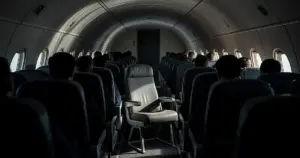
The 60-day clock on the MOU is ticking. Eighty minutes of talks ended with an empty chair and a threat. The next round, if it happens, will tell us whether this was a negotiating tactic or the beginning of something far more consequential.
Diplomacy works best when the other side believes you mean what you say. Tehran is about to find out.
